

Main guide: AI Horse Monitoring: How It Works, What It Can Detect, and Its Limits
Colic is common, and its first hours count. In the largest US survey of horse health (USDA NAHMS), there were about 4.2 colic episodes for every 100 horses each year, and about 11% of those episodes ended in the horse's death. And colic doesn't wait for daylight: an episode that starts after the evening check can go unnoticed until morning.
That is why more owners are looking at colic alarms and horse monitoring systems: devices that watch a horse when you can't and wake you when something looks wrong. They come in very different forms, from halters packed with sensors to software that reads your stable camera. This guide compares the main types honestly, so you can choose the one that fits your horse, your stable and your budget.
The main types at a glance
| Type | What's on the horse | What it measures | Best at | Watch out for |
|---|---|---|---|---|
| Smart halter | A halter with sensors in the headpiece | Movement and head position; some models heart rate and breathing | Physiological signs, one horse at a time | The horse must wear a halter in the stall; charging; fit |
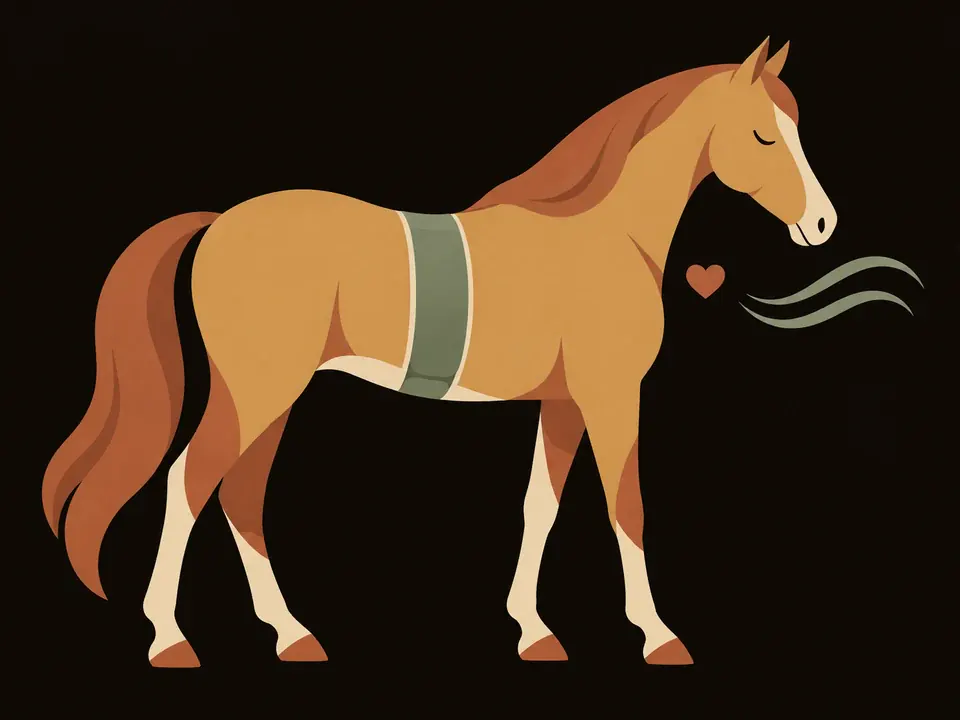
| Body or leg sensors | A surcingle, girth band or leg boots with motion sensors | Movement, lying and rolling; some heart rate | Detecting lying and rolling patterns, also at pasture | Rubbing, fit, horses that remove things; mostly research or niche products |
| Foaling alarms | A girth strap or a sensor fitted to the mare | Lying flat, sweating, or the start of birth | One job, done well: foaling | Single-purpose; often needs fitting late in pregnancy |
| AI stable camera | Nothing | Posture and behaviour from video: lying, rolling, pawing, drinking, visits | Whole stalls and whole barns; you see the clip | Only covers what the camera sees; can't measure vital signs |
| Plain camera with motion alerts | Nothing | Any movement in the picture | Cheap, simple remote viewing | Horses move all night: alerts quickly become noise |
Smart halters
A smart halter puts sensors into a halter the horse wears in its stall. The best known, the NightWatch Smart Halter, measures heart rate, breathing and activity, learns each horse's normal pattern and alerts you when the readings drift into a pattern that suggests distress.
Good for: owners who want physiological data (heart rate and breathing are things a camera can't see), and horses that tolerate a halter comfortably.
Think about: many yards don't leave halters on stabled horses, because a halter can catch on fittings. Ask whether the halter has a safe breakaway design. You will also need to charge it, check the fit regularly and buy one per horse.
Sensors on the body or legs
Accelerometers, the same motion sensors that count steps in a phone, can recognise lying down, rolling and pawing very well. Research is promising: a 2024 Belgian study fitted eight mares with accelerometer leg boots and detected induced colic with 91.2% accuracy compared with vets' assessments.
Good for: horses that live out as well as in, because the sensor travels with the horse.
Think about: body-worn sensors have to stay on, stay in place and stay charged, and some horses rub or chew them off. Many are still research tools rather than products you can buy and set up yourself.
Foaling alarms
Foaling alarms are monitors built for one job: telling you a mare has started to give birth. Some sit in a girth strap and trigger when the mare lies flat on her side or starts sweating; others are fitted to the mare herself.
Good for: breeding seasons, where they are a widely used and relatively affordable tool.
Think about: they are not general health monitors, and they are only fitted for the last weeks of pregnancy. Some camera systems now offer foaling alerts as well, alongside everything else.
AI stable cameras
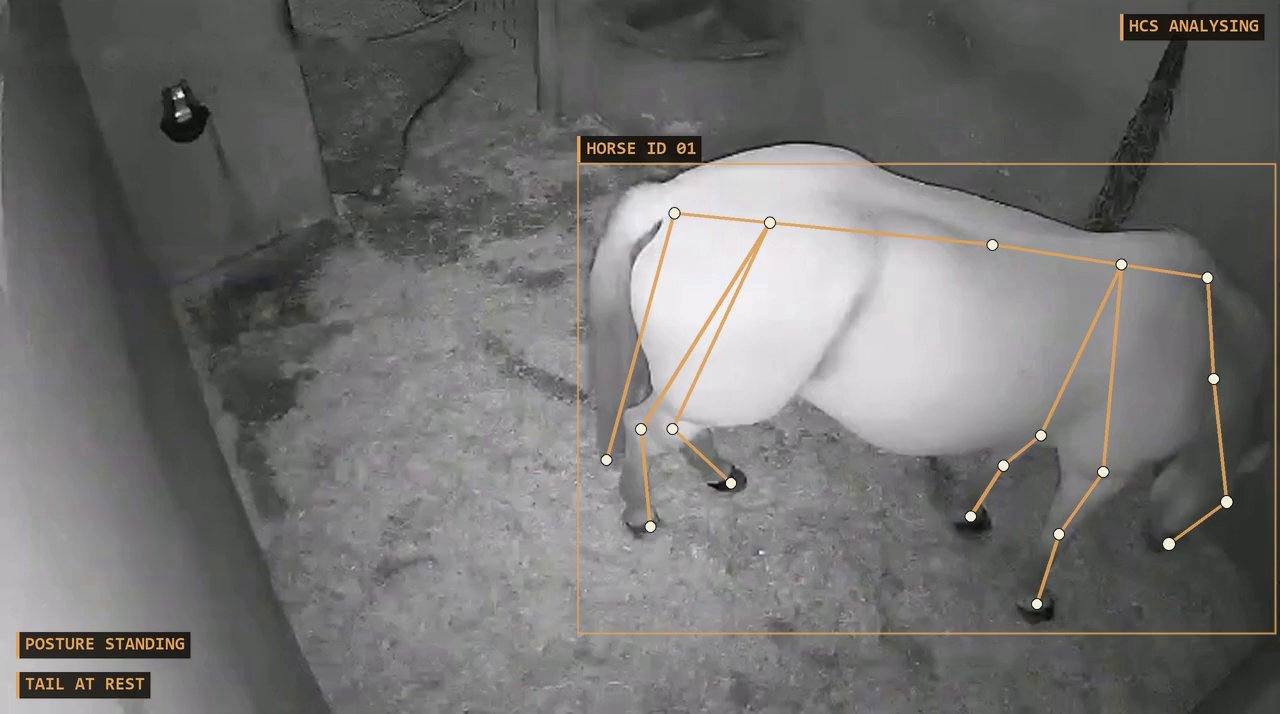
An AI camera system reads the video from a camera in the stall. It finds the horse, tracks its body, and recognises behaviour such as lying down, rolling, pawing, drinking and getting up, then alerts you when a worrying pattern keeps going. Examples include HCS and ACARiS's Horse Protector, which also advertises colic and foaling alarms. For a deeper look at how this works, see our guide to AI horse monitoring.
Good for: watching every horse in a barn without fitting anything to any of them; owners who want to see why they were woken up; stables that already have IP cameras, which many systems can use as they are.
Think about: a camera can't count heartbeats or take a temperature, and it only sees what it is pointed at. Placement and night vision matter a lot (see how to choose a stable camera).
Plain cameras with motion alerts
A standard Wi-Fi camera with "motion detection" is the cheapest way to look into the stall from your phone. Its alerts, though, are triggered by any movement, and a horse moves all night. Owners soon learn to ignore them, which defeats the point. They are a viewing tool, not a monitor.
Which one fits your situation?
- One horse at home, and you want vital signs: a smart halter, if your horse wears one safely in the stall.
- A barn of several horses, or a yard with staff: an AI camera system. One camera per stall covers everyone, with nothing to fit, charge or replace.
- A mare due to foal: a foaling alarm, or a camera system that offers foaling alerts. A camera also lets you watch the birth without disturbing her.
- A horse that recently had colic or colic surgery: talk to your vet about what to watch for. Many owners combine a camera with a sensor in this period.
- Horses at pasture: a body-worn sensor, since cameras rarely cover a whole field.
Questions to ask any seller
- What does it actually detect? "Colic detection" can mean many things. Ask which behaviours or readings trigger an alert.
- How often does it raise false alarms? And how easy is it to check whether an alert is real?
- How does the alert reach me at 3 a.m.? A push notification you sleep through is not an alarm.
- What has to be done every day? Charging, fitting, cleaning, checking batteries.
- What happens if the internet drops? Does it tell you it has stopped watching?
- Does it work in my climate? Heat, dust and humidity are hard on electronics, and on halters and straps too.
- What does it cost per horse, per year? Include hardware, subscriptions and replacements.
The bottom line
No monitor replaces a good routine, regular checks and your vet. What a monitor changes is when you find out. A horse that starts rolling at 1 a.m. and is found at 1:10 is in a very different situation from one found at 7.
For named products side by side, see AI horse monitoring systems compared. If you'd like to see what an AI camera notices in your own stable, tell us about your setup.
Sources
- USDA APHIS, NAHMS Equine '98, Colic incidence and fatality
- US Equestrian, NightWatch Smart Halter: because you can't always be there
- Equus, Wearable colic detector shows promise, on Eerdekens et al., Equine Veterinary Journal 2024
- ACARiS, Horse Protector for horse owners
- Dalla Costa E, Bovo M., Editorial: Advances in the application of technology for monitoring horse welfare and health, Frontiers in Veterinary Science 2025